
Identifying asbestos: a complete guide
Home » Asbestos removal » Identifying asbestos
ABOUT SLOOP CONCURRENT
- Nationwide coverage
- Well insured
- All certifications
- Customer-focused
- Skilled workmanship
- Affordable
- Professional
- Years of experience
Request a quote?
TABLE OF CONTENTS
- What is asbestos?
- How Sloop Concurrent works
- Identifying asbestos by smell
- About Sloop Concurrent
- Identifying asbestos with a lighter
- Want an exact price? Request a quotation
- Types of asbestos
- What customers say about Sloop Concurrent
- Sloop Concurrent: certifications and insurance
- Sloop Concurrent: other popular services
- Request a no-obligation quote
How do I recognise asbestos? What does it look like? What colour is it? Owners of properties that may contain asbestos often ask what they should look for to establish whether asbestos-containing materials have been used in or around their home. Asbestos is very difficult to recognise because its fibres are extremely small and can really only be identified under a microscope.
However, we can give you a few characteristics to look out for:
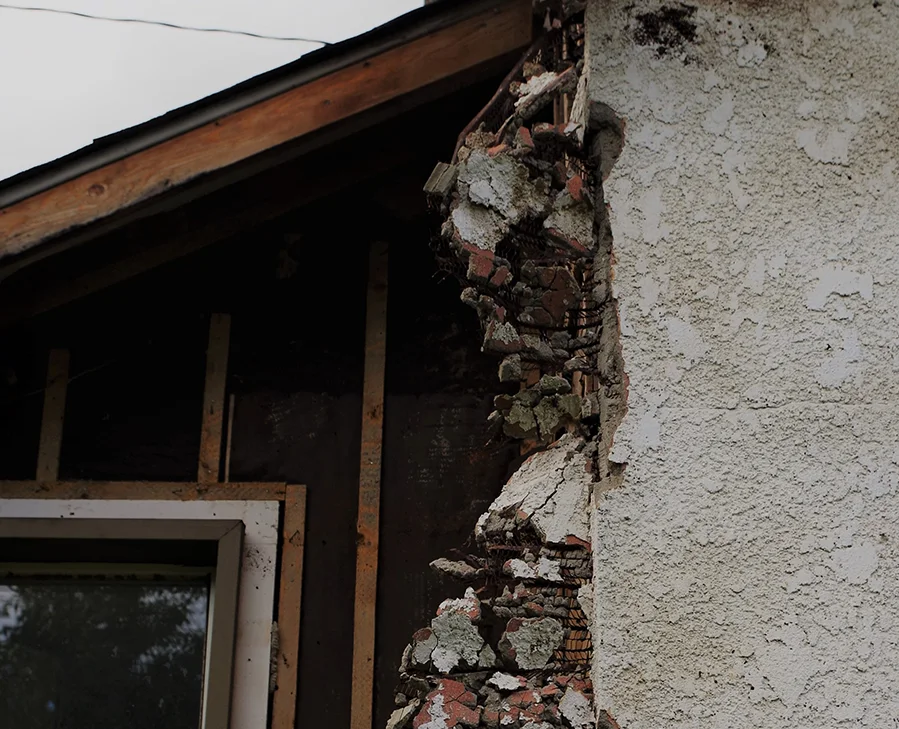
- Asbestos has a fibrous structure that can only be recognised where asbestos-containing material is damaged or along a less neatly finished edge.
- Asbestos-containing material often makes a distinctive sound when tapped with a screwdriver, for example. It sounds somewhat like tapping on a blackboard.
- Very occasionally, colour may offer an indication: asbestos is usually blue, brown or white. Unfortunately, this colour can often only be recognised in raw asbestos and changes during manufacture and processing.
- You can also consider how products were used: asbestos was often included in products that needed to resist heat or wear. As asbestos was a cheap raw material, it is frequently found in cheaper products manufactured before 1993.
What is asbestos?
What is asbestos? Asbestos is a collective name for several naturally occurring minerals belonging to the silicate group. Did you know that the word 'asbestos' comes from the Greek 'asbestos', meaning indestructible? Asbestos was known for its useful properties: it was hard-wearing, strong, insulating and resistant to high temperatures. It was also cheap, so it was widely used in construction, including corrugated roofing sheets, asbestos cement and asbestos insulation.
Asbestos was used with or without a binding agent to make a wide variety of products. It was mixed with materials such as adhesive, concrete, plaster or cardboard. If the asbestos remains firmly bound within the material, the health risk is very small. However, the material must be in good condition and must not be worked on or demolished.
Friable asbestos is not firmly bound within another material, so fibres can be released easily. Inhaling asbestos fibres can be life-threatening, which is why friable asbestos almost always needs to be removed.
How Sloop Concurrent works
Before we start work for you, you will naturally want to know how Sloop Concurrent operates. Below is a simple step-by-step guide. We take care of everything from start to finish.


Request a quote
Request a no-obligation quotation and receive a tailored price within 24 hours.
Schedule the project
If you accept the quote, we will schedule the demolition work with you

Carrying out the work
Our team starts work. We only hand over the project when you are 100% satisfied.


Identifying asbestos by smell
What does asbestos smell like? Unfortunately, asbestos has no distinctive smell; it is essentially odourless. Even if asbestos is released during a fire, you cannot smell it. This is because asbestos withstands high temperatures very well and does not burn; usually, only the material containing it burns.
This is precisely what makes asbestos difficult: most types have no distinctive colour or smell. This makes asbestos hard for many people to recognise. Identifying asbestos by smell is therefore impossible in many cases. All you can do is apply the tips above, which do not depend on the material's smell or colour. Asbestos is an entirely natural product. This fibrous material comes in various colours and smells. When it has been used in a roof, there is usually almost nothing to smell or see. It is generally grey, just like the rest of the roof. When used in walls or other load-bearing structures, it may have a slightly musty smell. This is not a reliable indication, of course, so it is important to apply the following tips to identify possible asbestos:
Check the date of the asbestos material
Check who manufactured the material and look online to find out whether it contains asbestos. The age of the building or material can tell you a great deal about the asbestos risk. Buildings constructed between the 1940s and the 1980s are very likely to contain some form of asbestos material. If the building was constructed after 1990, you can be fairly sure you are safe, although an extra check is always worthwhile. Contacting the manufacturer directly can quickly tell you what the materials contain. If you cannot obtain this information, you will need to consider the following methods.
Look at the fibre pattern of the asbestos
On the outside of buildings, asbestos sheets were often secured with aluminium runners. These runners are held by small nails without pointed ends. However, distinguishing the types of runners can be difficult, as they may be hidden beneath the surface. This also applies to the inside of the sheets. You can look on Google for photographs. If you recognise this construction, asbestos was probably used when the building was built. As well as corrugated sheets, these runners are also often found on roofing underlay boards, planters and roof slates.
Examine the surface of the asbestos
Asbestos-containing materials often have a surface pattern resembling tiny dimples across the whole surface. Asbestos sheets with a smoother texture also exist, but are less common. If you see this pattern, it is sensible to take precautions against asbestos, just to be safe.
Identify the form of asbestos
Asbestos was moulded into many different shapes and sizes for a range of purposes. Asbestos sheets, for example, were used against walls, while asbestos grids were made to sit beneath roof tiles. Each form comes from a particular type of manufacturer. You can look up this information online. It may help you identify asbestos in a particular structure. Bear in mind, however, that this method is not always straightforward. As there are different types of asbestos, it can be difficult to tell them apart. This is especially challenging when asbestos has been used as a surface layer. You cannot access it without demolishing something, which is not recommended because of the significant risks involved!
About Sloop Concurrent
Sloop Concurrent is a demolition company with nationwide coverage. Our certified demolition teams provide quality, professional demolition work throughout the Netherlands. With several operating bases across the country, we can help you quickly. Our 100 skilled demolition workers are happy to assist, and our efficient way of working allows us to offer demolition services at affordable prices.
Every day, we help private and commercial customers demolish, renovate and repair a range of structures. This includes complete demolition, but our experienced team is equally capable of removing a load-bearing wall or chimney. We confidently describe ourselves as a full-service demolition company.


Identifying asbestos with a lighter
If you have applied the tips above, there is a strong chance that you are dealing with asbestos. One way to check is to test it with a lighter. How exactly does this work? This flame test involves moving a lighter over the visible bundles of fibres where the sheet has broken. You could do this on a corner or another loose piece, for example. If the fibres only glow and do not burn away, the material is probably asbestos. Bear in mind that this test will not always work; having an asbestos inspection carried out is the only way to be completely certain.
Want an exact price? Request a quote
Would you like to know what the demolition will cost? Request a quotation with no obligation and receive it by email within 24 hours. Would you prefer us to prepare a quotation on site? That is no problem at all!
Types of asbestos
Asbestos falls into two main groups with different compositions, structures and shapes. The spiral or serpentine group includes white asbestos (chrysotile). The straight or amphibole group includes blue asbestos (crocidolite), brown asbestos (amosite), yellow asbestos (anthophyllite), grey asbestos (tremolite) and green asbestos (actinolite).
The colour of asbestos is often visible only in the raw material. Once processed, the type of asbestos usually can only be identified through laboratory testing.
White asbestos is the most common type in the Netherlands, accounting for around 85 per cent of the asbestos used. It is also the least harmful type and can be recognised by its curled fibres.
Around 10 per cent of asbestos used in the Netherlands was brown asbestos. This type is very dangerous because its fibres are needle-shaped and extremely thin.
Blue asbestos accounted for the remaining 5 per cent. This is the most dangerous type because of the barbs on its fibres. These barbs prevent the fibres from coming loose and can cause serious damage to organs such as the lungs.
Asbestos was mined on various continents for many years. It was already in use in the 19th century, initially mainly in shipbuilding and later in the construction of homes and commercial properties. By the 1930s, asbestos was known to be harmful to public health: construction workers developed lung disease and attributed it to working with asbestos. However, no action was taken and asbestos remained in use until a ban was introduced in 1993. Asbestos storage and processing were also banned on 1 July 1993.
What customers say about Sloop Concurrent
Sloop Concurrent would be nowhere without its customers. This is what our customers have to say about us.


Sloop Concurrent: certifications and insurance
When you ask Sloop Concurrent to carry out your demolition work, you can look forward to a pleasant working relationship. Sloop Concurrent is well insured. We hold CAR insurance, or Construction All Risks insurance, covering material damage arising during the construction or installation of buildings, roads, bridges and systems. We have never had to make a claim on this insurance, but we prefer to be on the safe side.
Sloop Concurrent is also an accredited training company, training the skilled tradespeople of the future. All our demolition workers are trained in-house, and we do not subcontract our work. This is reflected both in the total cost and in the final result.
Asbestos must always be considered when demolishing structures. We therefore hold dNAA certification, which allows us to remove asbestos. We do so safely and responsibly.


Sloop Concurrent: other popular services
Demolition is work we carry out with passion and expertise. Below are some of the services our customers choose most often.
Request a no-obligation quote
Would you like more information about our demolition services or a free, no-obligation quotation?
We aim to provide a tailored quotation for your demolition project within 24 hours.
Sloop Concurrent
Olivierstraat 16, 2021BL Haarlem
Sloop Concurrent · Olivierstraat 16, Haarlem
View directions