
Chimney removal
Home » Demolition » Chimney removal
ABOUT SLOOP CONCURRENT
- Nationwide coverage
- Well insured
- All certifications
- Customer-focused
- Skilled workmanship
- Affordable
- Professional
- Years of experience
Request a quote?
TABLE OF CONTENTS
- Why remove a chimney?
- How Sloop Concurrent works
- Where can a chimney be removed?
- About Sloop Concurrent
- Chimney removal costs
- Want an exact price? Request a quotation
- Do you need a permit to demolish a chimney?
- What customers say about Sloop Concurrent
- Removing an asbestos chimney
- Removing a chimney flue
- Removing a chimney yourself
- Benefits of professional chimney removal
- Removing an old chimney and installing a new one
- Removing a shared chimney
- How we remove a chimney safely
- Chimney removal and frequently asked questions
- Our projects
- Sloop Concurrent: certifications and insurance
- Sloop Concurrent: other popular services
- Chimney removal quote
- Preparing your chimney project
Would you like to remove your chimney? Perhaps you are having problems with it, or want to remove a chimney breast to create more living space. Whatever your reason, chimney removal can be quite an undertaking.
Many people do not realise that chimney demolition is specialist work best left to experienced demolition workers. From the outside, you cannot tell whether a chimney is load-bearing or what is present inside it. It is therefore important to be well prepared before deciding to remove your chimney.
This page provides a complete overview. We explain how a chimney can be removed safely and the steps required to have it demolished professionally.
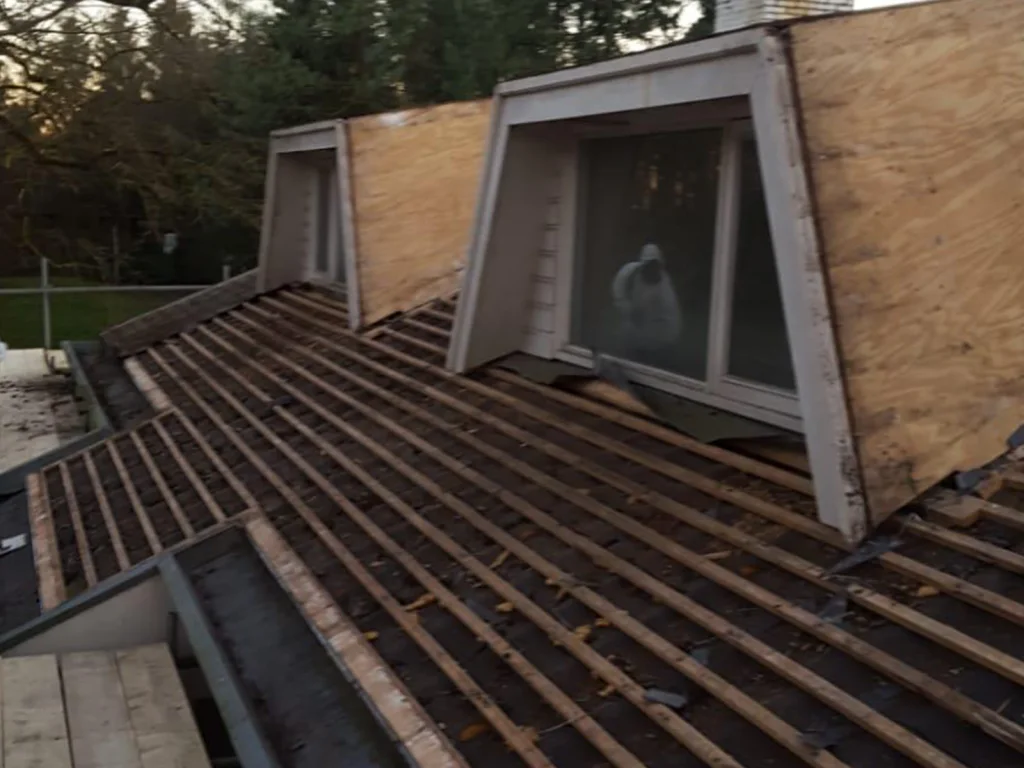
Why remove a chimney?
There are several reasons to remove a chimney. The most common is simply having other plans for your roof and living room. Perhaps you feel a chimney is outdated? You can have it demolished and the area neatly finished. Below are many other common reasons to remove a chimney breast or chimney:
Defects in your chimney
Your masonry can become porous, bricks can crack and damaged lead flashing can cause leaks. A defective chimney can also let cold air into your property or cause stability problems. In this situation, we recommend removing your chimney.
Extra living space
Would you like more living space in your home? A chimney can look beautiful, but a straight wall offers more possibilities. It lets you make better use of the room and gives you more freedom with your interior. Removing a chimney breast can therefore offer many advantages when creating an open living space.
No longer functional
Do you no longer use your old chimney? Perhaps you have had a new flue installed or now use a heat pump. The unused chimney can then be removed.
Would you like to retain the authentic appearance of your chimney breast or chimney? You can choose to remove only the flue. This preserves the beautiful, traditional character of the chimney or chimney breast without having to worry about creosote or similar problems associated with an ageing chimney.
How Sloop Concurrent works
Before we start work for you, you will naturally want to know how Sloop Concurrent operates. Below is a simple step-by-step guide. We take care of everything from start to finish.


Request a quote
Request a no-obligation quotation and receive a tailored price within 24 hours.
Schedule the project
If you accept the quote, we will schedule the demolition work with you

Carrying out the work
Our team starts work. We only hand over the project when you are 100% satisfied.


Where should the chimney be removed?
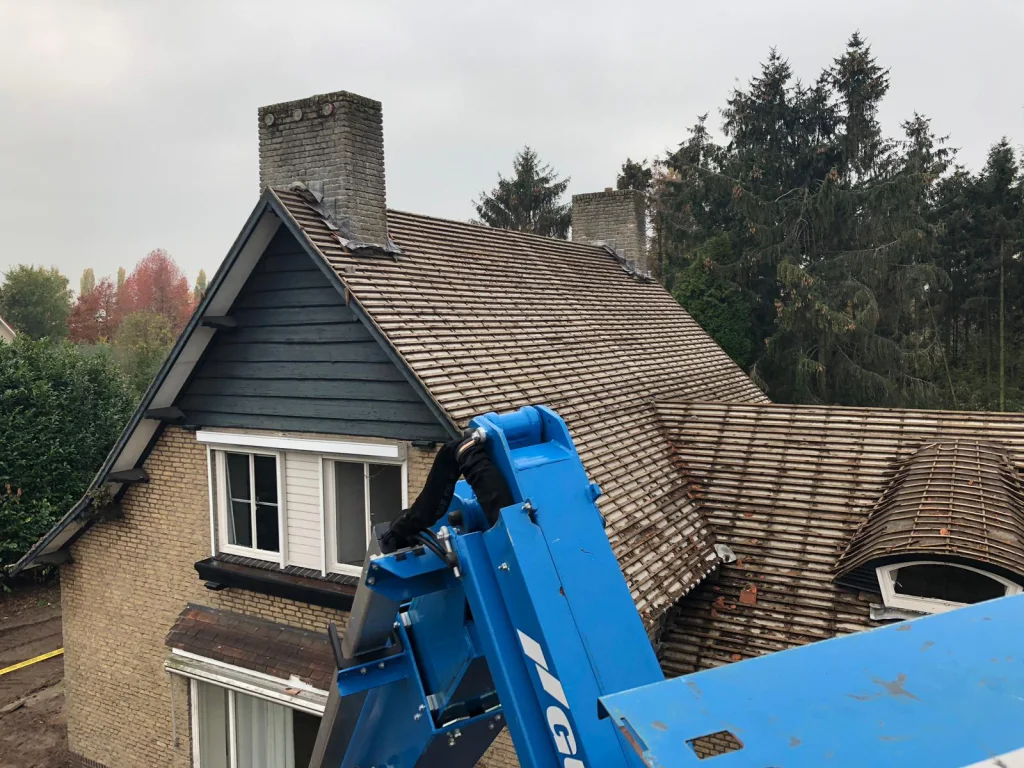
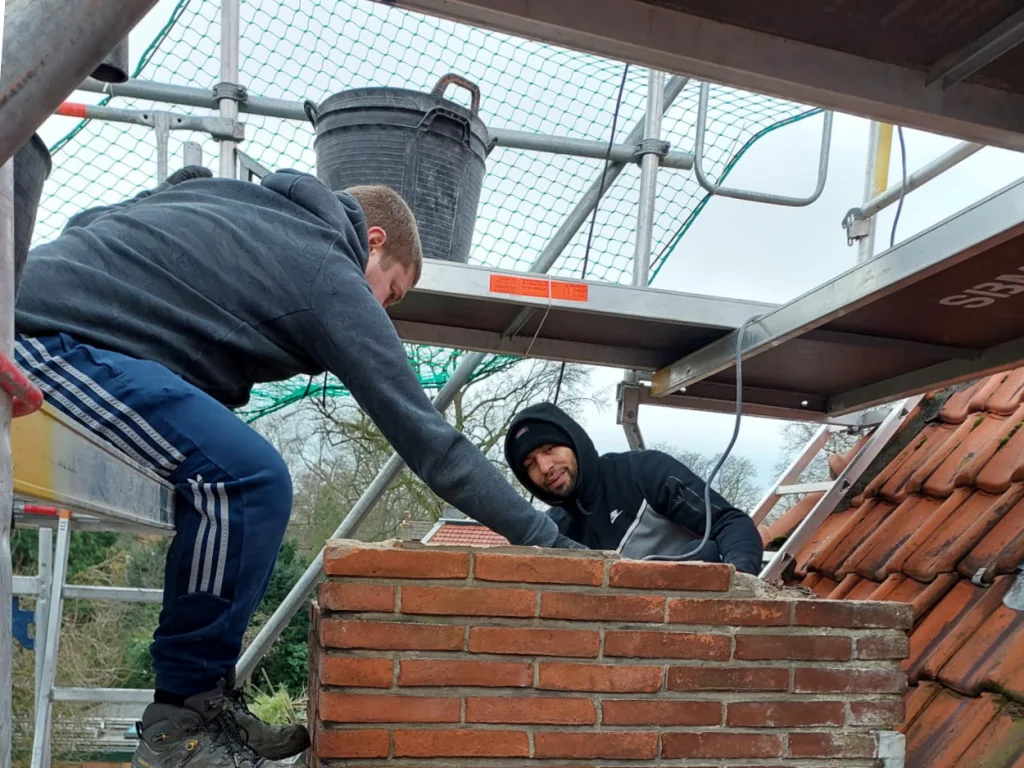
Every house is different, and so is the position of its chimney. A chimney breast may be in the living room or bedroom, but it could also be in the loft or another part of the property. The method our specialists use to remove a chimney therefore depends on its location. The position also has a significant influence on the cost and duration of the demolition work. Below you will find common locations for chimney breasts and chimneys.
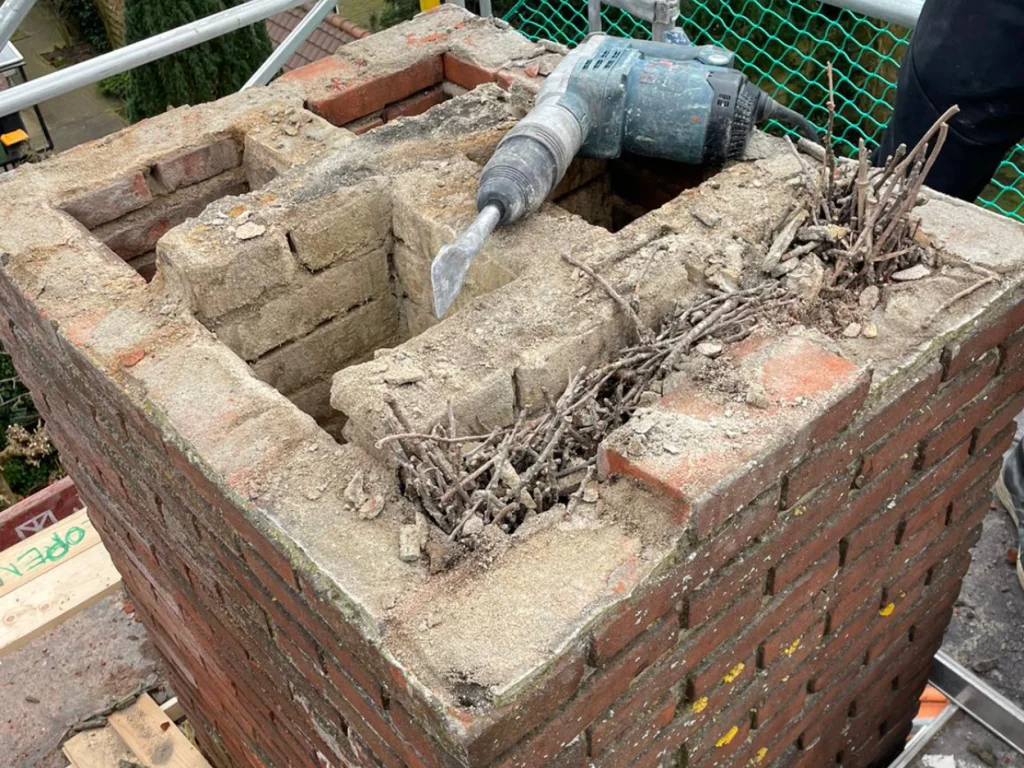
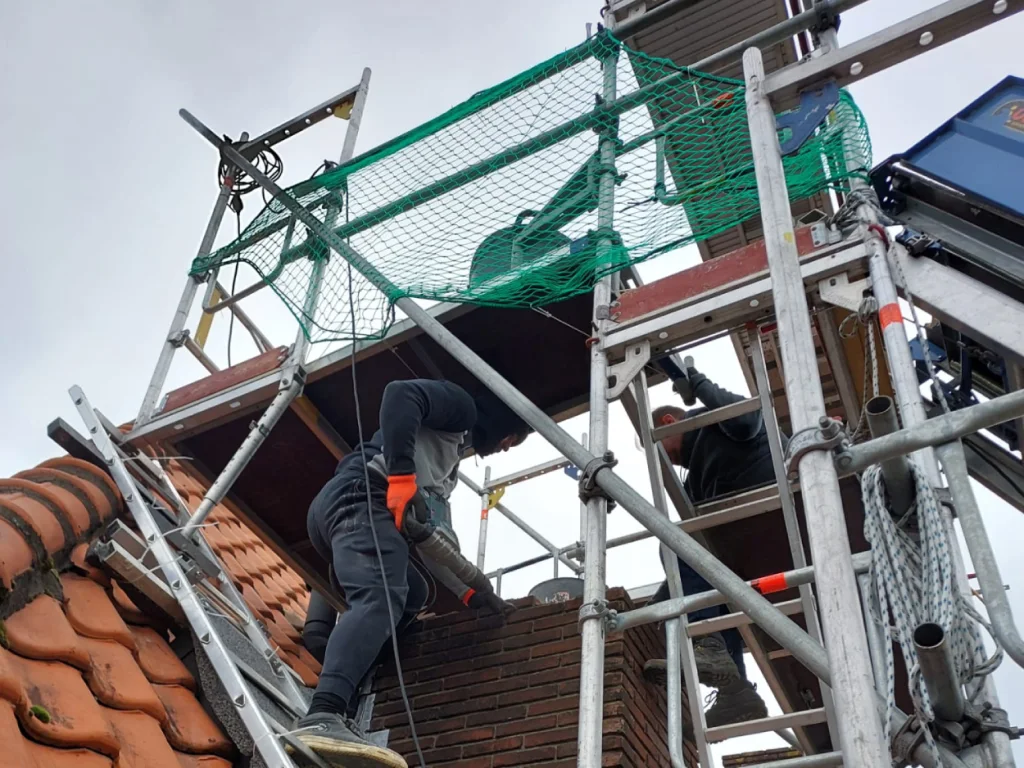
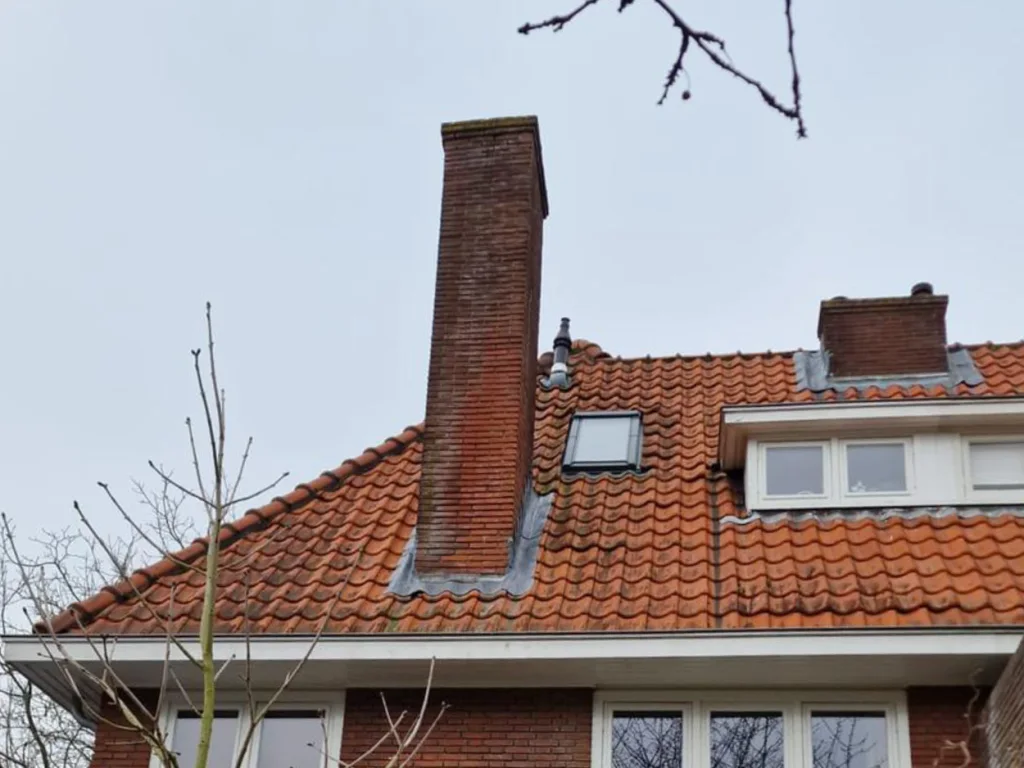
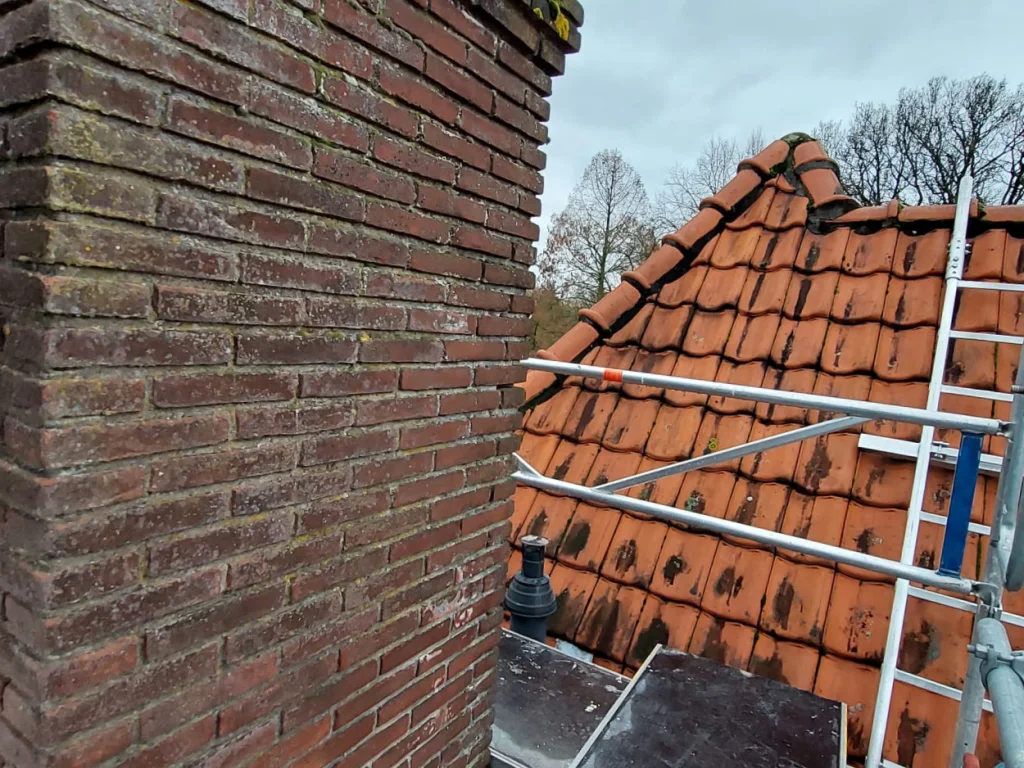
Removing the chimney above roof level
Almost all chimney stacks are on the roof. Would you like to keep the chimney breast and open fireplace? You can choose to remove only the chimney stack above the roof. This allows you to keep the chimney breast and fireplace indoors while preventing cold air from entering. Particularly with today's high energy prices, it is good to have your home insulated as effectively as possible. We can remove the chimney stack from the roof if you wish, or you can choose to have the chimney sealed instead. Either way, you will no longer suffer from the cold.
Removing a chimney inside the home
Would you like to preserve the chimney's authentic appearance on your roof, but no longer want the chimney breast or fireplace inside? You can choose to remove only the chimney breast or fireplace. If the chimney is load-bearing, its structure must be supported. This option is often chosen when the interior no longer suits the owner's taste. It creates an attractive open space, and the resulting straight walls give you far more flexibility.
Living room
Would you like more space in your living room? You can choose to have just the chimney breast removed. This creates a straight wall and more usable space for furniture, allowing you to arrange the living room to your liking. It is therefore a popular option.
Loft
Do you have leaks or a poorly insulated loft? We recommend removing this section of the chimney in the loft. This prevents further problems and reduces heating requirements. It also creates extra space for furniture or other items. Because only part of the chimney is removed, the cost is more modest.
Upper floor
The same principle applies to an upper floor as to the loft: removing the chimney on that floor can create more space. You can retain the chimney breast downstairs while having the upper-floor section removed. This prevents cold air entering those rooms and improves their insulation.
Complete chimney removal
Have you had enough of your chimney, or do you use a modern heating system? Perhaps you have installed a heat pump? Whatever your reason, we can remove your chimney completely. Our demolition workers do this skilfully, affordably and efficiently. Complete removal includes demolishing the chimney above the roof, removing the flue on each floor, removing the chimney breast and taking away the rubble.
Does the chimney have a load-bearing function? We take the appropriate measures, including installing a supporting structure to ensure the chimney is properly supported.
About Sloop Concurrent
Sloop Concurrent is a demolition company with nationwide coverage. Our certified demolition teams provide quality, professional demolition work throughout the Netherlands. With several operating bases across the country, we can help you quickly. Our 100 skilled demolition workers are happy to assist, and our efficient way of working allows us to offer demolition services at affordable prices.
Every day, we help private and commercial customers demolish, renovate and repair a range of structures. This includes complete demolition, but our experienced team is equally capable of removing a load-bearing wall or chimney. We confidently describe ourselves as a full-service demolition company.


Chimney removal costs
Would you like your old chimney removed? Are you wondering how much it will cost?
The exact cost of chimney removal depends on several factors:
- Are you removing only the chimney above the roof, the chimney breast or both?
- How would you like us to finish the opening in your roof?
- The size of the chimney.
- Access to the chimney.
- Is the chimney load-bearing or non-load-bearing?
- How complex is the chimney removal (asbestos, birds' nests, creosote)?
- Would you like to know exactly how much removing your chimney will cost?
To give you an initial idea, we list some guide prices below.
| Type of work | Average price |
|---|---|
| Removing the chimney stack from the roof | € 1400 – € 2000 |
| Chimney breast removal | € 1700 – € 3000 |
| Removing the chimney and chimney breast | € 3000 – € 5000 |
Want an exact price? Request a quote
Would you like to know what the demolition will cost? Request a quotation with no obligation and receive it by email within 24 hours. Would you prefer us to prepare a quotation on site? That is no problem at all!
Is a permit required to demolish a chimney?
Whether your chimney work requires a permit depends on the plans and the property. Have the structural implications assessed beforehand and complete the permit check in the Omgevingsloket. Listed-building status or rules applying to the address may also be relevant.
Unfortunately, in some cases it is necessary, understandably, to apply for a permit. For example, an old masonry chimney may extend all the way down to the foundations. This often means it is a load-bearing chimney. In that case, structural calculations must be prepared. Your chimney must then be supported with adjustable steel props. Without these, the chimney could sink, creating a risk of collapse.
Different permits required
- Environment and planning permit: Do you need a permit? This varies by municipality. On the Omgevingsloket website, you can check whether one is required. Make sure you do this in good time. We can help where necessary.
- Demolition permit: Will the work generate more than 10 cubic metres of rubble? Then you also need a demolition permit to remove a chimney. Another reason a demolition permit is required is the presence of asbestos in the chimney. If neither applies, no demolition permit is needed.
- Building permit: Do you have a load-bearing chimney, or are you making structural alterations to your home? Then a building permit must be obtained. The chimney's supporting structure must be supported, which requires a permit and structural calculations.
What customers say about Sloop Concurrent
Sloop Concurrent would be nowhere without its customers. This is what our customers have to say about us.


Removing asbestos from a chimney
Older chimneys may contain asbestos-containing materials. The year of construction alone is not conclusive. Before any work, have it assessed whether a survey is required.
Do you have an older chimney? Take no risks and have it thoroughly inspected first. Does the inspection reveal asbestos in the chimney? You must then notify the local council. The chimney must also be removed by a certified asbestos removal company.
Asbestos in your chimney: where is it?
Asbestos can be found in the following places:
- In the flue and ventilation duct;
- In your chimney breast;
- In the chimney casing;
- Inside the chimney flue;
- In the cement.
What else can be found inside a chimney?
There are 2,000 chimney fires in the Netherlands each year, almost always caused by creosote. Creosote is a highly flammable, tar-like deposit that forms when wood does not burn completely in your stove. This often happens because the wood is too damp. That is why it is so important to let wood dry properly before burning it.
Does your chimney contain creosote? Ordinary chimney sweeping will not remove it. It requires specialist removal with a chain brush. The drawback is that not every chimney is suitable for this. Is your chimney too porous to have the creosote removed with a chain brush? You can choose to have the entire chimney removed by our certified demolition team.
Creosote
There are 2,000 chimney fires in the Netherlands each year, almost always caused by creosote. Creosote is a highly flammable, tar-like deposit that forms when wood does not burn completely in your stove. This often happens because the wood is too damp. That is why it is so important to let wood dry properly before burning it.
Does your chimney contain creosote? Ordinary chimney sweeping will not remove it. It requires specialist removal with a chain brush. The drawback is that not every chimney is suitable for this. Is your chimney too porous to have the creosote removed with a chain brush? You can choose to have the entire chimney removed by our certified demolition team.
Bird's nest
Birds' nests are regularly found in chimneys in the Netherlands. Unfortunately, they can seriously disrupt planned work. You cannot simply remove a bird's nest, especially during the breeding season from March to September. The best time to remove a chimney containing a nest is therefore around late September or early October. Birds will no longer be nesting there, and the work can be completed before the heating season.
Tip: Want to prevent birds nesting in your chimney? Have a guard or chimney cowl fitted as a precaution.
Bees
An unused chimney can become a nesting place for bees. A while ago, a news story reported that a couple had 100,000 bees and as much as 70 litres of honey in their chimney. The honey eventually dripped through the ceiling into the house. Have you noticed bees around your chimney? Having it removed as a precaution can save a great deal of trouble later.
Chimney flue removal
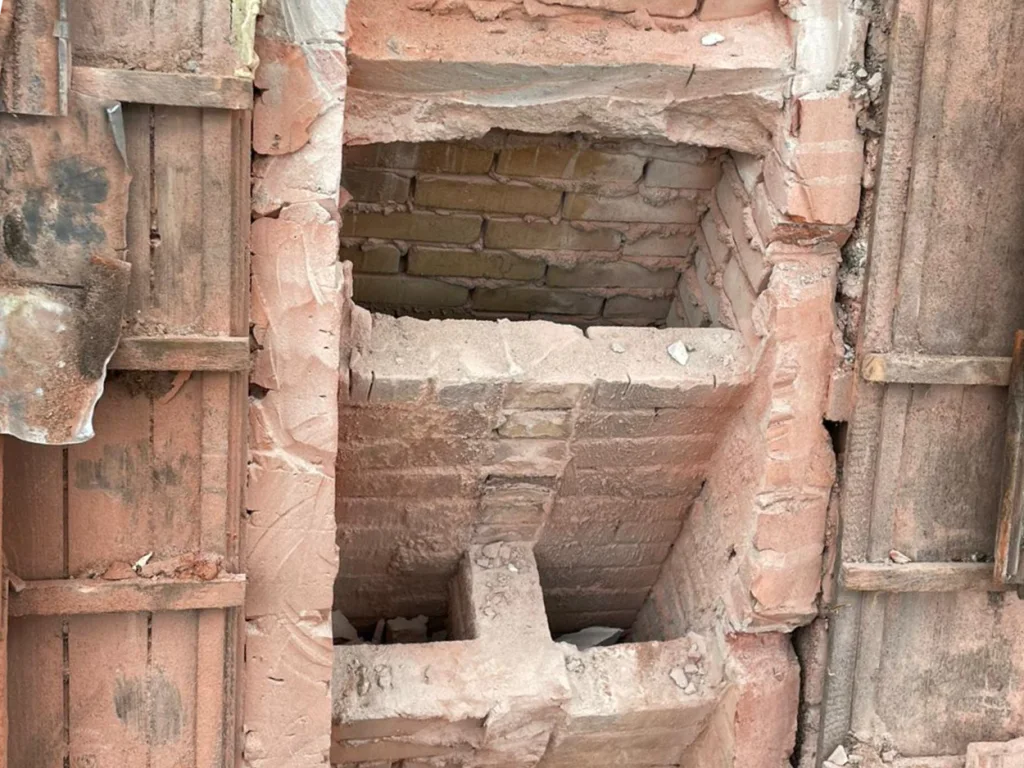
Would you like to have a chimney flue removed? The work must be carried out safely. The first step is to check whether a permit is required. To apply for this permit, you need structural calculations. These are prepared by a structural engineer using the building drawings held in the local authority's archives. The structural calculations can then be used to prepare a temporary support plan. This plan sets out how the chimney's load-bearing structure will be supported, preventing collapse and ensuring that your chimney is removed safely. Once the demolition work is complete, the rubble must also be taken away. When the entire chimney flue has been removed and the rubble cleared, the roof must be made watertight. The walls, floors and ceilings are then finished.
As you have read, removing a chimney flue is not simple. It requires experience and should not be undertaken casually. We therefore always recommend hiring a professional company such as Sloop Concurrent.
Removing a chimney yourself
Do not begin removing a chimney yourself on the basis of an online explanation. First have its structural role, the sections that will remain, access and any flues in use assessed. Agree the necessary support and sequence of work with specialists.
Possible asbestos also needs attention during preparation. Do not damage suspicious material, and have the necessary investigation assessed before demolition begins.
Benefits of having a chimney removed by a professional company
If you have your chimney removed by a tradesperson:
- You can be sure the structure will remain stable, even if the chimney is load-bearing.
- You can be sure of a thorough inspection of the work and any asbestos that may be present.
- You receive honest, tailored advice.
- The work is carried out correctly and in accordance with all safety regulations.
- You can be sure of a neat, seamless finish, as though there had never been a chimney!
- The rubble is removed neatly, so you are not left with the mess.
Would you like our experienced professionals to remove your chimney? Request a tailored quote without obligation.
Removing an old chimney and installing a new one
Would you like your old chimney removed and a new flue installed straight away? We can do that! An old chimney is often removed because the home is heated by central heating or a heat pump, leaving the chimney without a purpose. Stainless steel flues are another option nowadays. These round flues have a modern appearance and are easy to maintain. After removing the old chimney, we immediately install a new flue for you. This allows you to keep an attractive chimney while enjoying the convenience of modern heating methods.
Removing a shared chimney
With a shared chimney, the wall continues between two properties. If the chimney is removed, both sides of the walls will need to be made good. We do this professionally and accurately, but it is more difficult than removing a chimney from a terraced house.
Removing the chimney is often simpler in a terraced house. The chimney is removed down to roof level, after which roof panels are fitted. Tile battens are placed on these panels, followed by the roof tiles. This is much simpler than removing a shared chimney.
How we safely remove a chimney
Would you like a chimney, chimney breast or fireplace removed or demolished? As you have read, removing a chimney involves quite a lot. We therefore recommend hiring a certified demolition company. Sloop Concurrent knows every aspect of the trade. We carry out your wishes and make working together a pleasant experience.
You have several options when removing a chimney. You could remove only the chimney stack above the roof, for example, or leave it in place and remove only the chimney breast inside your home. The quality of the finishing work is extremely important. The work must, of course, be completed professionally after demolition. The roof must be finished neatly, and removing an indoor chimney breast also requires careful finishing. A good demolition company helps you make these choices and takes care of the entire process.
We follow this process when removing a chimney:
- You request a quote first
- You receive a completely no-obligation quotation
- If you accept, we will schedule the work with you.
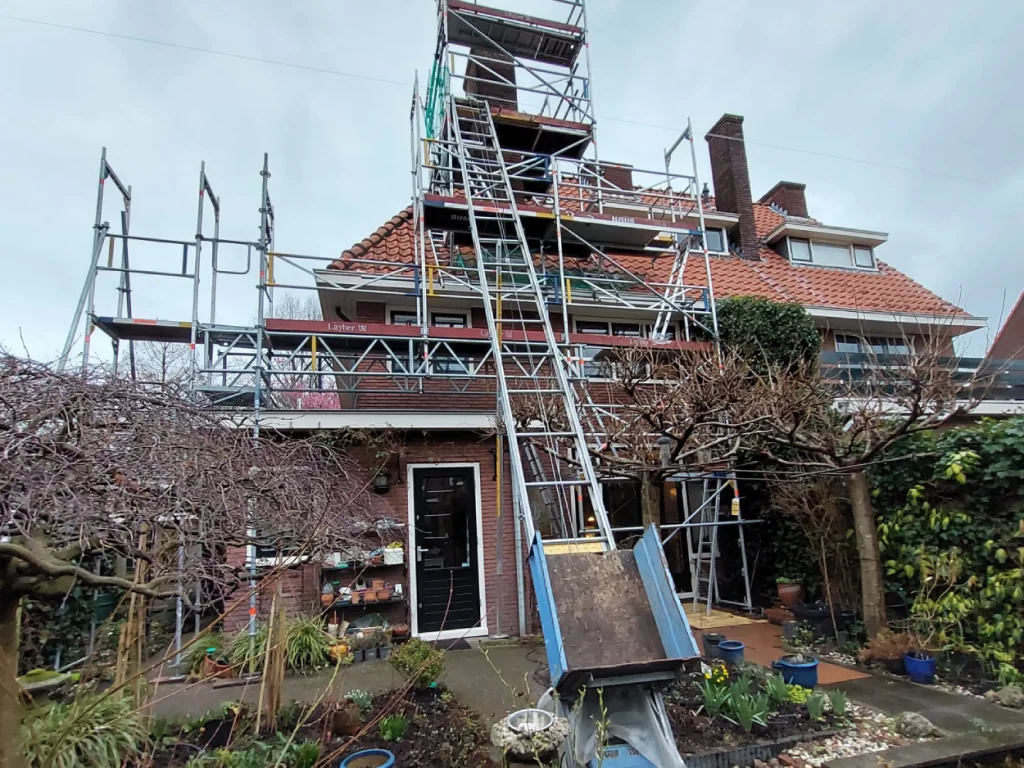
- Our tradespeople begin by erecting scaffolding outside.
- If the chimney is load-bearing, we ensure that its supporting structure is properly supported
- The chimney opening is finished neatly
- Would you also like the chimney breast removed? We will remove it too
- Finishing exposed walls and ceilings
- Removing the rubble
Would you like to know more about how our tradespeople remove a chimney? The step-by-step chimney removal guide explains the process in detail.
Chimney removal and frequently asked questions
No. The structure, flues in use, condition of the roof and possible asbestos-containing materials must be assessed first. It must also be clear which parts will remain and how they will be supported.
Drawings and on-site investigation help establish its function. Appearance alone is not enough. Have a structural engineer assess what the chimney supports and how the remaining parts will be supported.
The price depends on the section to be removed, height, access, support, roof repairs and disposal. Any asbestos survey and removal have their own scope. Request an up-to-date quotation that clearly separates removal from making good.
The duration is determined for each project. Preparation, any permit, structural assessment, access and roof repairs all count. A previously stated average duration is not a fixed agreement for your chimney.
Agree this beforehand. Have rubble removal, transport and disposal charges listed separately in the quotation. Suspect material requires a different approach; do not mix it with ordinary building rubble.
Discuss the plan with your neighbours first and have ownership, flue use and structural connections investigated. Removing one side may affect the other. Record the agreements and technical solution before work begins.
This cannot be established from a photograph or the building's age alone. Older chimneys may contain asbestos-containing materials. If in doubt, arrange a professional survey before work begins.
Sloop Concurrent handles enquiries from the Netherlands. Tell us your location and access arrangements so we can assess the options and any transport costs for your project. See our service areas.

Our projects
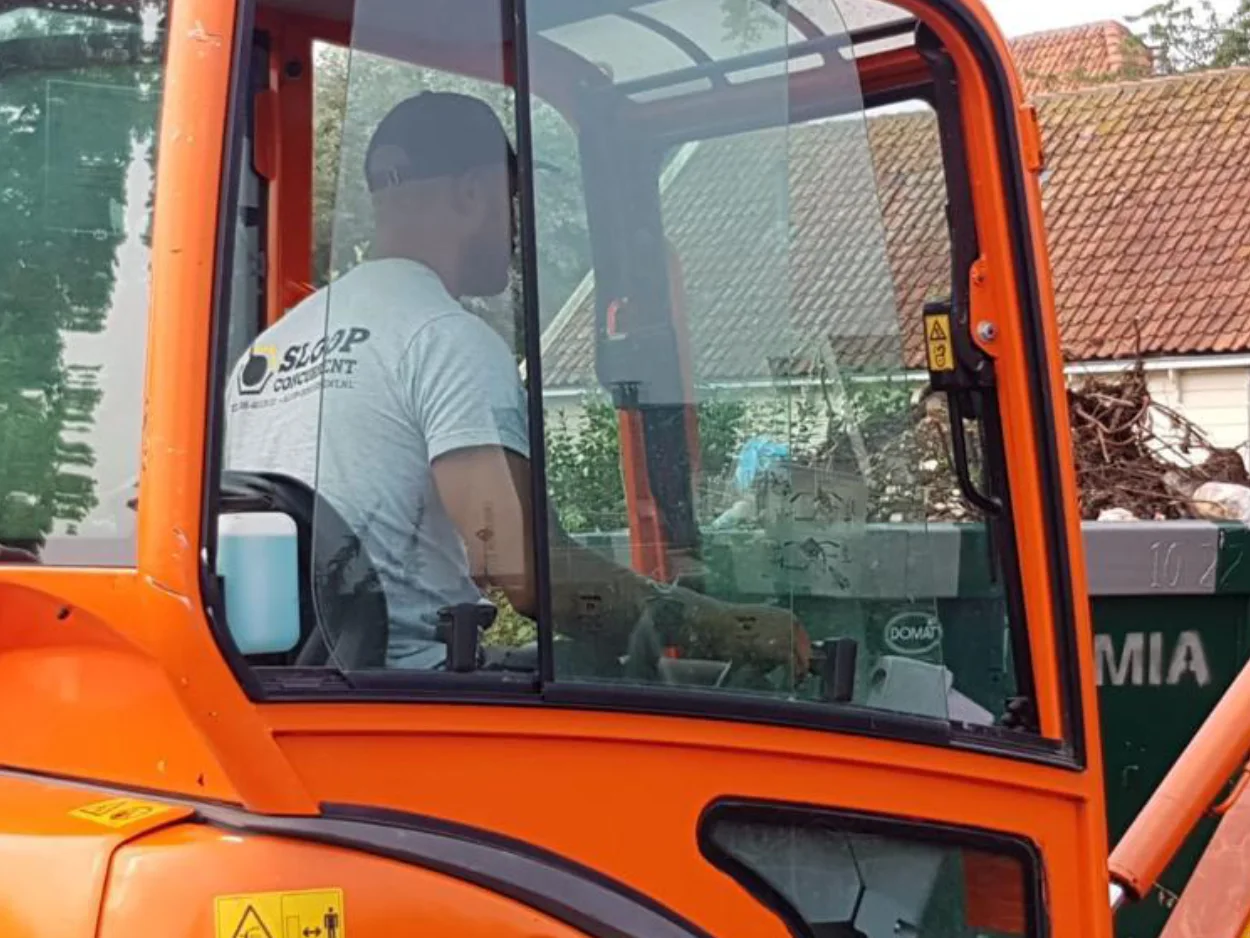
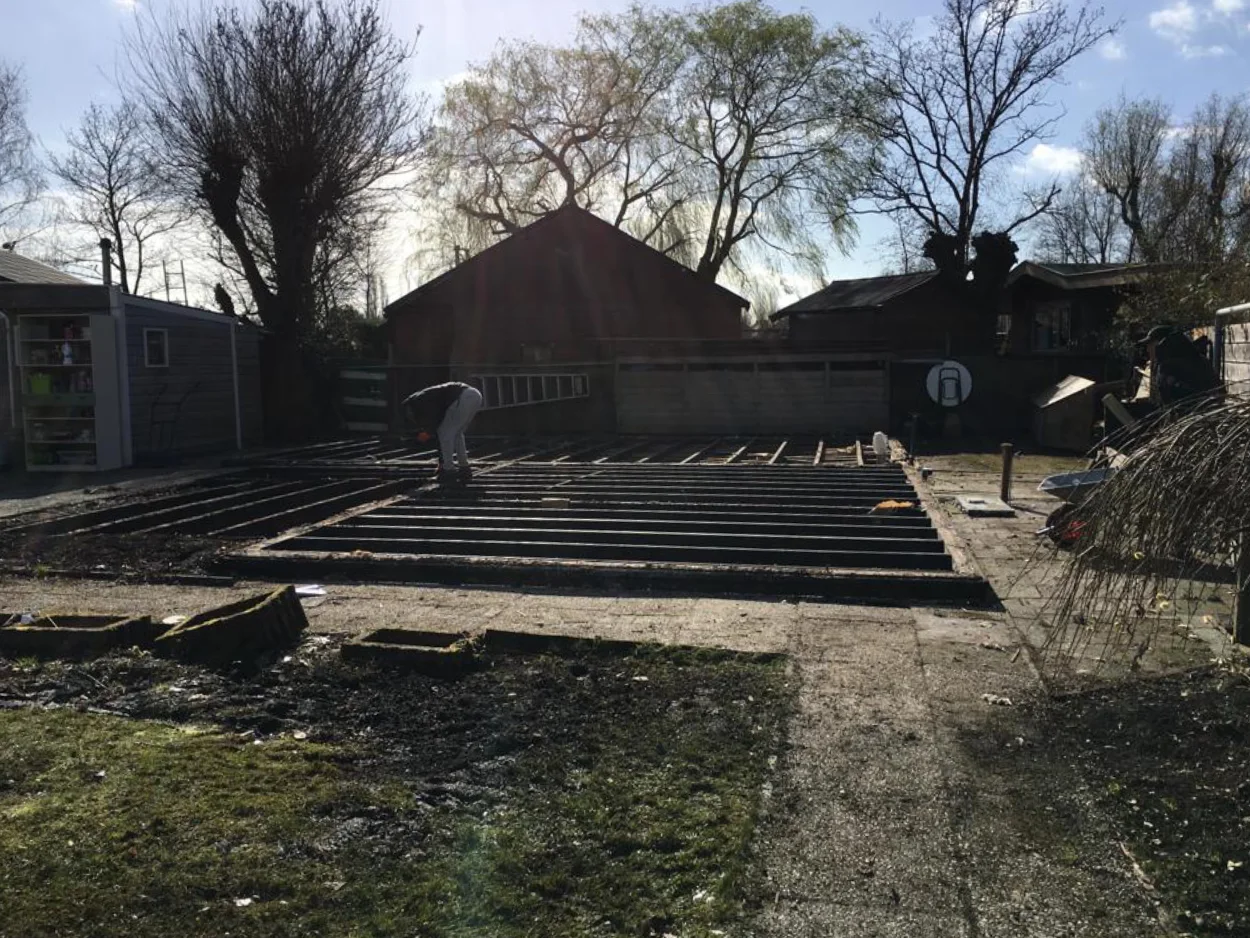
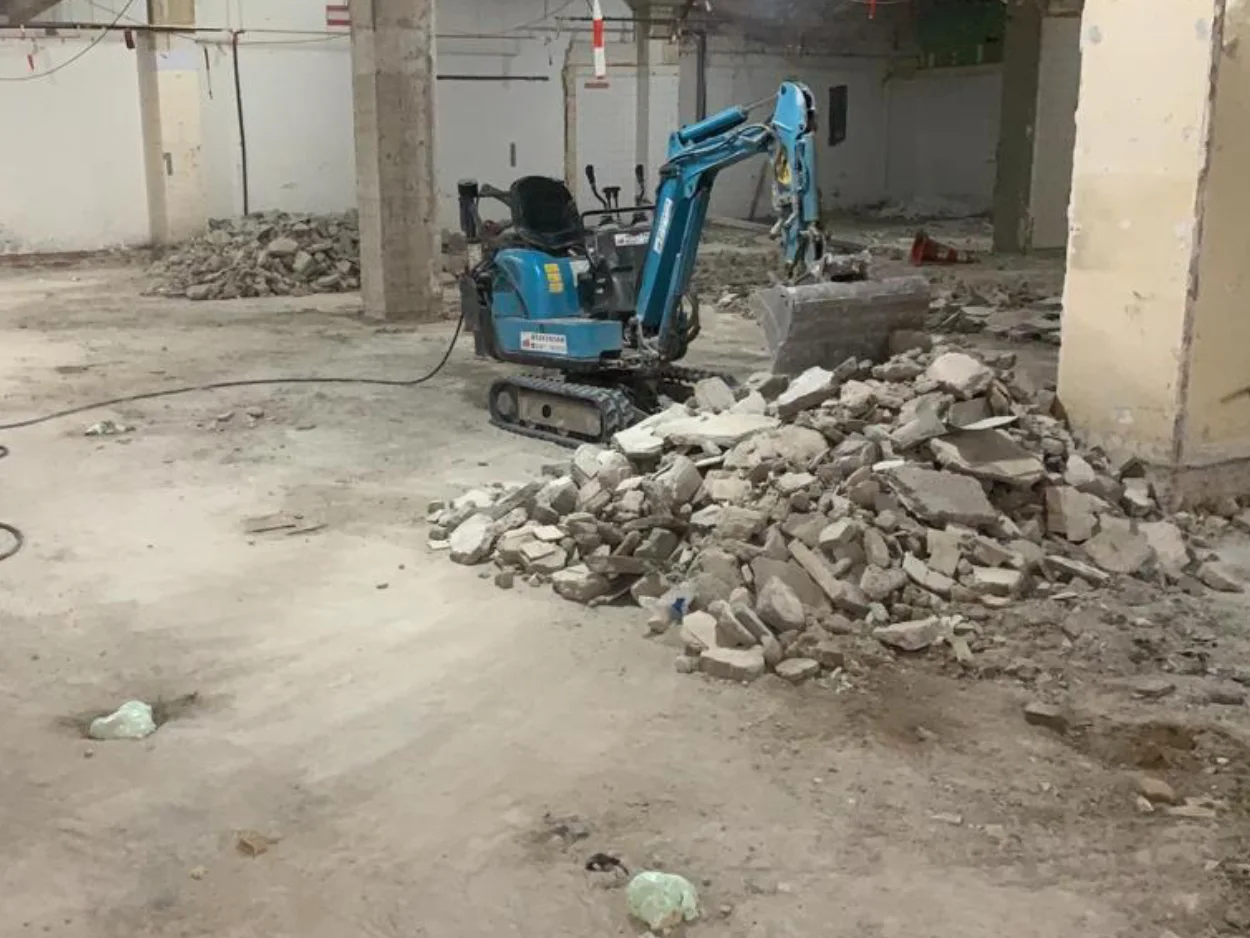
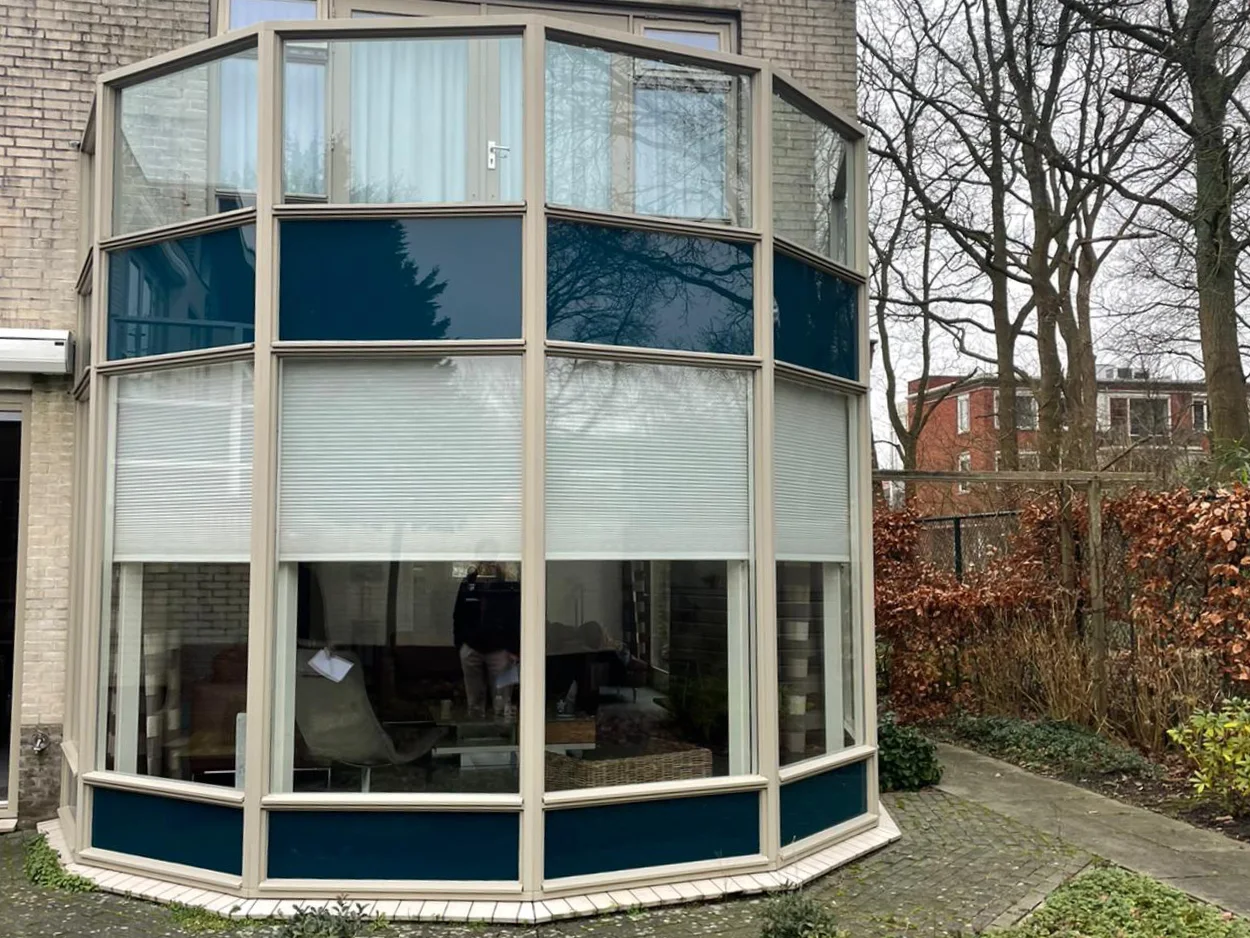
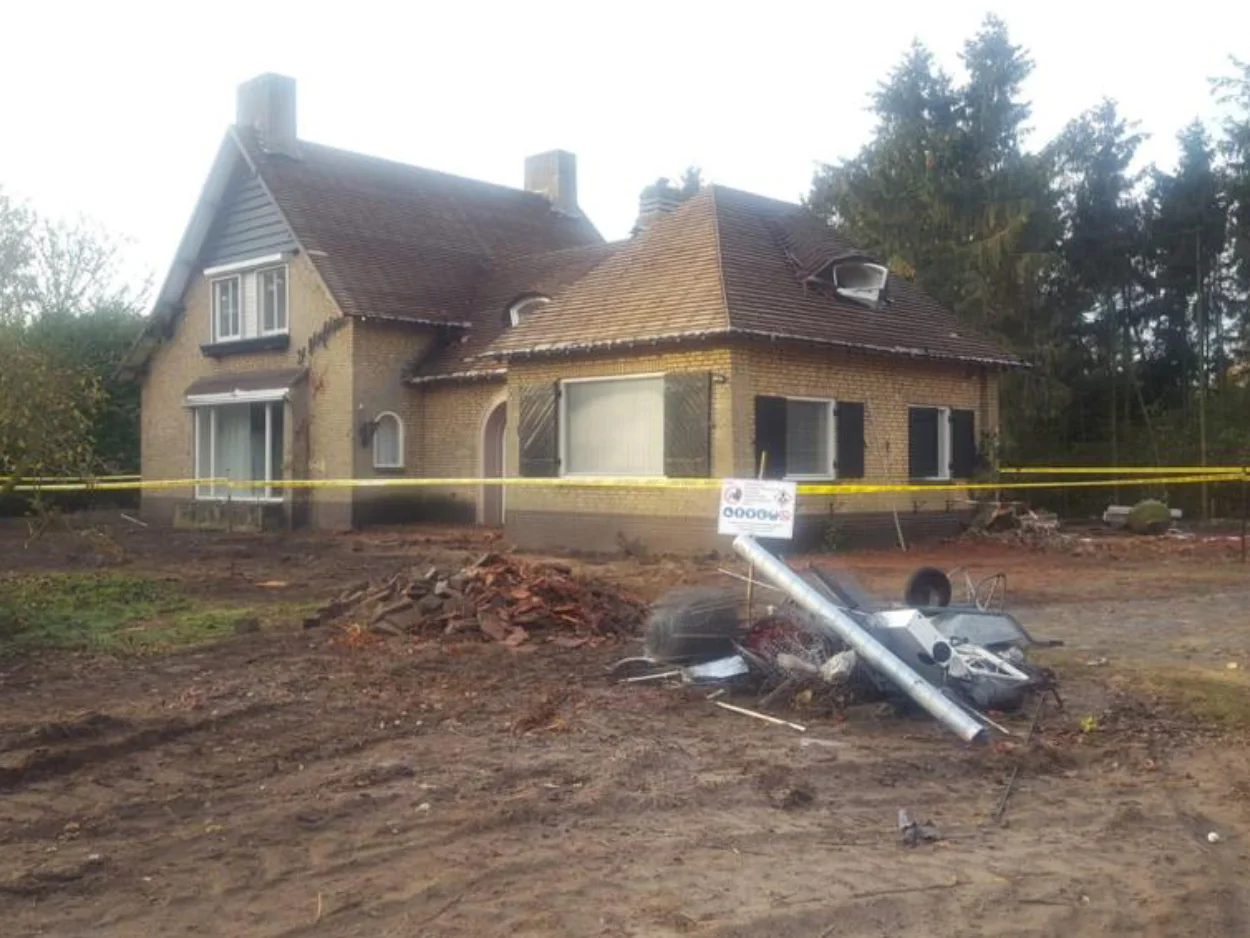
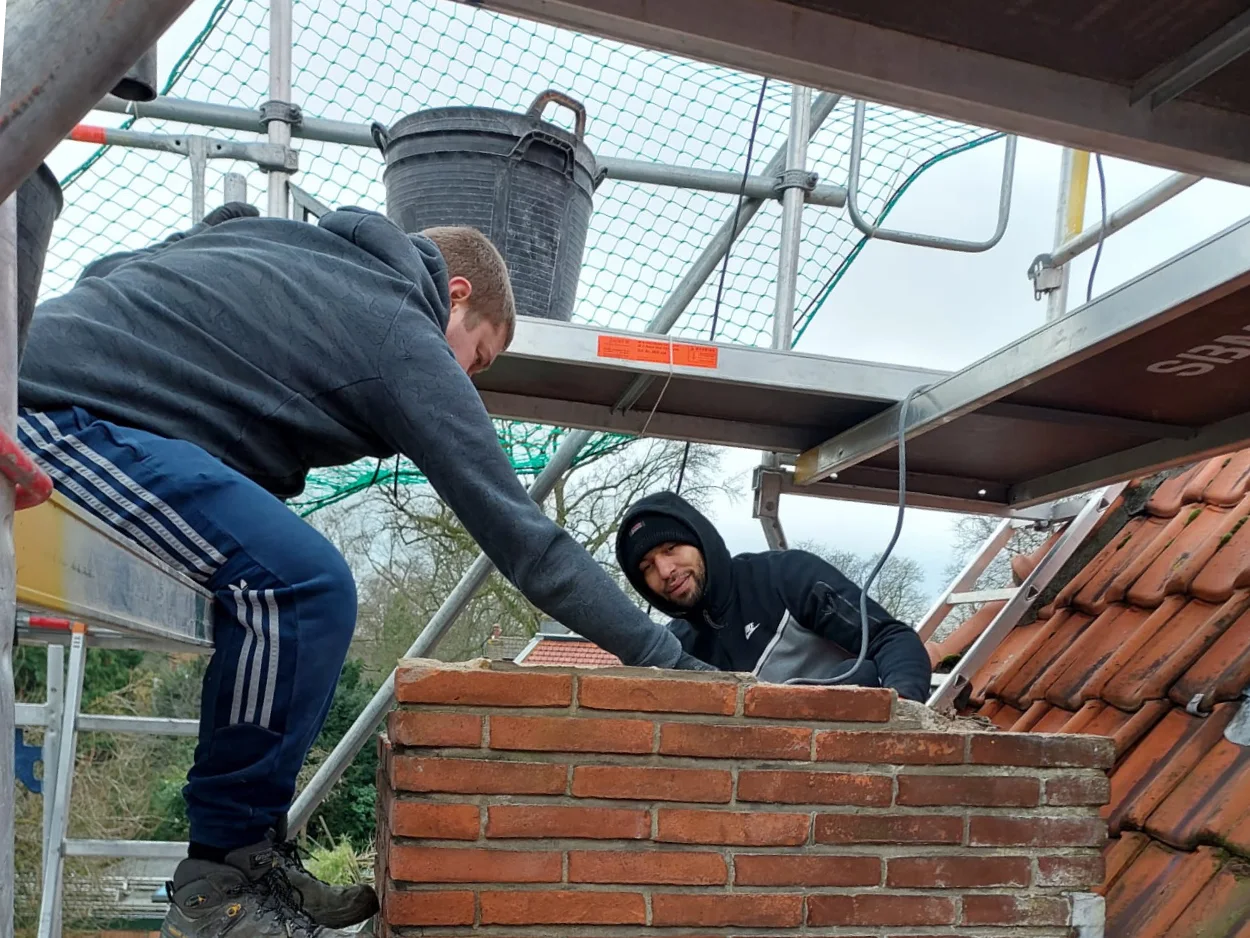
Would you like to see how we work? Browse our projects and see how our tradespeople approach different demolition jobs. We always work tidily and keep hassle to a minimum. Sloop Concurrent also offers the best overall price.
Sloop Concurrent: certifications and insurance
When you ask Sloop Concurrent to carry out your demolition work, you can look forward to a pleasant working relationship. Sloop Concurrent is well insured. We hold CAR insurance, or Construction All Risks insurance, covering material damage arising during the construction or installation of buildings, roads, bridges and systems. We have never had to make a claim on this insurance, but we prefer to be on the safe side.
Sloop Concurrent is also an accredited training company, training the skilled tradespeople of the future. All our demolition workers are trained in-house, and we do not subcontract our work. This is reflected both in the total cost and in the final result.
Asbestos must always be considered when demolishing structures. We therefore hold dNAA certification, which allows us to remove asbestos. We do so safely and responsibly.


Sloop Concurrent: other popular services
Demolition is work we carry out with passion and expertise. Below are some of the services our customers choose most often.
Chimney removal quote
Would you like more information about our demolition services or a free, no-obligation quotation?
We aim to provide a tailored quotation for your demolition project within 24 hours.
Sloop Concurrent
Olivierstraat 16, 2021BL Haarlem
Sloop Concurrent · Olivierstraat 16, Haarlem
View directions